
Washing Machine Repair in Georgetown, TX
A washer that won’t drain, won’t spin, or quietly leaks onto the laundry room floor is rarely as broken as it feels. Most washer faults come down to a single failed part — a pump, a switch, a valve, a hose — and the repair costs a fraction of the machine.
We repair top-load and front-load washers across Georgetown, diagnose honestly, and tell you plainly when a machine isn’t worth putting money into.
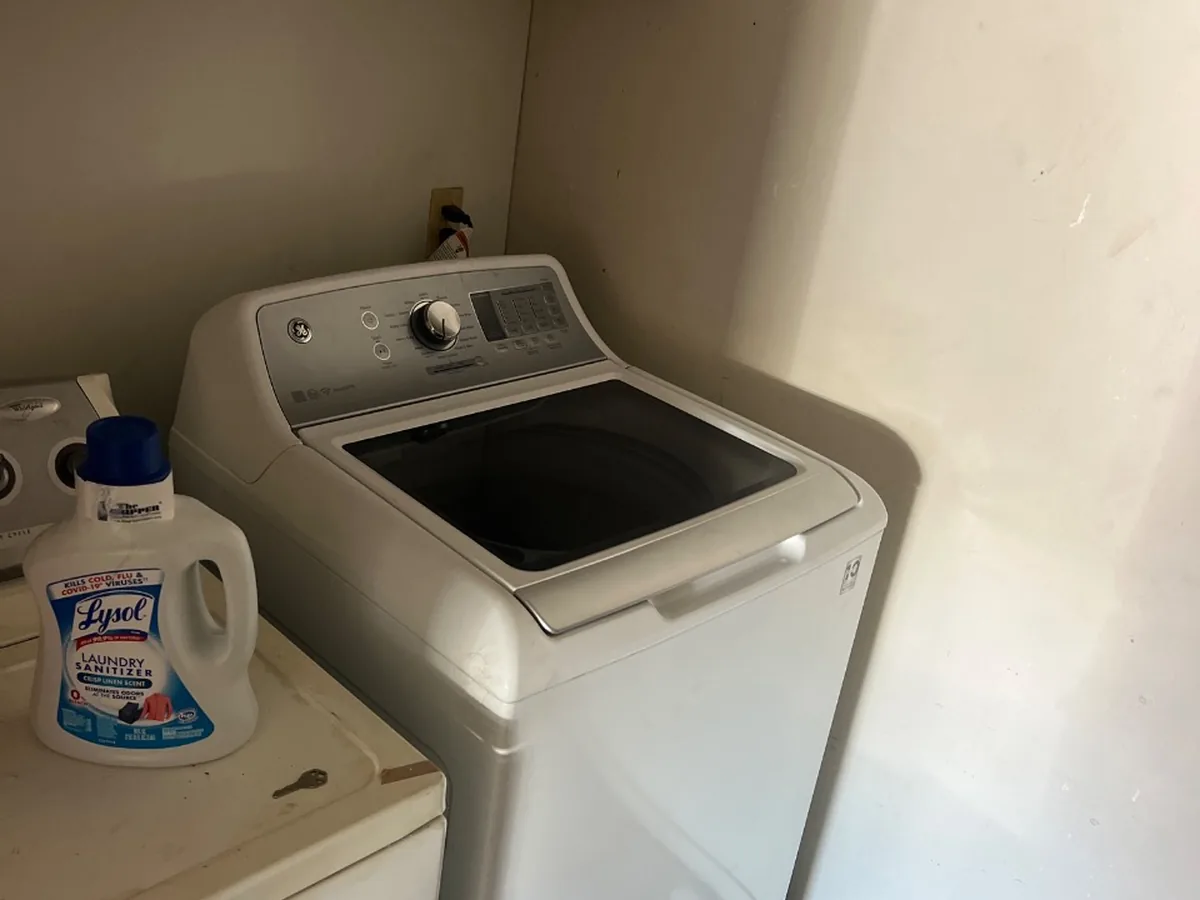
The Faults We See Most
- Won’t drain — blocked drain pump, clogged pump filter, or a kinked drain hose. Often something small lodged in the impeller.
- Won’t spin — a failed lid switch on a top loader, a worn belt, a broken motor coupler, or simply an unbalanced load the machine refuses to spin.
- Won’t fill, or fills slowly — water inlet valve, or scale-clogged inlet screens.
- Leaking onto the floor — supply hoses, the door boot on a front loader, a pump seal, or an overflow caused by a failed pressure switch.
- Musty smell — biofilm in the door gasket and detergent drawer on front loaders.
- Shaking and walking — shipping bolts never removed, leveling feet out of adjustment, or worn suspension.
- Stops mid-cycle — lid lock, door latch, or a drain fault the control board is waiting on.
Hard Water Is Doing Half the Damage
This is the part that’s specific to living here. Central Texas groundwater is hard, and Georgetown is no exception — that mineral content is great for nothing and hard on anything that moves water.
In a washing machine it shows up in two places. The first is the pair of small mesh screens inside the water inlet valve, which slowly pack with scale until the machine takes forever to fill. The second is the valve itself, which wears faster than it would on soft water. When we get a “my washer fills really slowly” call in Georgetown, the inlet screens are the first place we look, and a fair share of the time cleaning them is the entire repair.
It’s worth knowing because it changes what you do about it: scale is a maintenance problem, not a defect, and catching it early is a cheap visit instead of a replaced valve.
The Hose Conversation Nobody Wants to Have
We bring this up on every washer call, because it’s the one failure that turns a $200 problem into a five-figure one.
The two supply hoses behind your washer are under household water pressure every hour of every day, whether the machine is running or not. Standard rubber hoses get brittle over time, and when one lets go while you’re at work, it doesn’t stop — it runs. Burst supply hoses are one of the most common causes of serious water damage in American homes.
The fix is unglamorous and cheap: braided stainless steel hoses, replaced roughly every five years. If yours are rubber and you can’t remember installing them, we’ll swap them while we’re already back there.
When to Repair and When to Let It Go
Pumps, valves, switches, belts, hoses, and boot seals are almost always worth repairing — they’re modest parts on a machine that has plenty of life left. Where we’ll tell you to stop is a failed transmission or a main bearing on an older top loader: those repairs approach the cost of a new machine, and we won’t recommend one just because we could do it.
You’ll get the honest read, including the version where the answer is “replace it.”
Upfront Pricing
Most washing machine repairs in Georgetown run $150–$400, parts and labor included, quoted flat after the diagnosis and before we start. If it turns out the fix is a five-minute one, you’ll hear that too.
Since we’re already in the laundry room, it’s the right moment to look at the dryer beside it — and if the refrigerator has been acting up, we can handle that on the same visit. See all of our appliance repair services in Georgetown.
Washer full of water and going nowhere? Call for a diagnosis and a flat repair price.
Washing Machine Repair — free estimate for Georgetown
Talk to the person who'll actually do the work — not a call center. Free estimates for Georgetown and surrounding areas.
Call (737) 215-4114